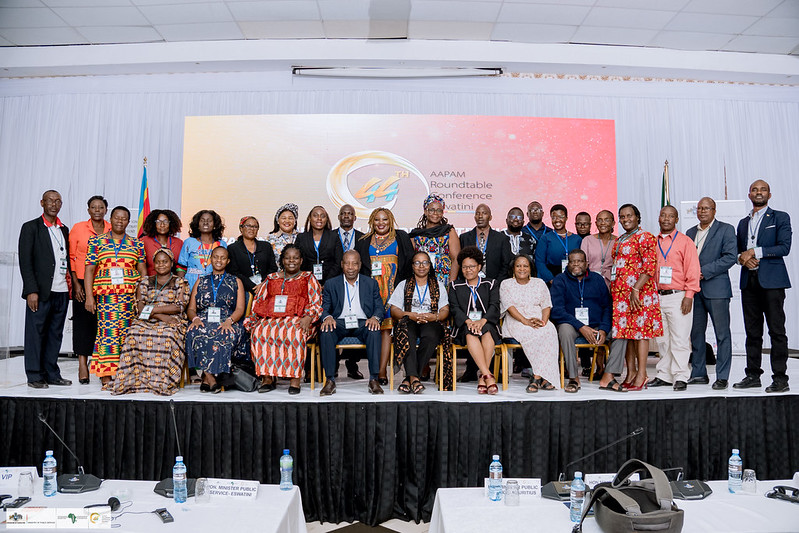
Integration of Linguistics, Mental Health & Wellness for Responsive Governance
Mots-clés :
Mental Health & Wellness, Responsive Governance, LinguisticsRésumé
In 2022, the New Dawn Government of Zambia, after winning elections in 2021, introduced the free education policy from Early Childhood Education (ECE) all the way to secondary school as a campaign promise. Although this is a good move because all children and even adults have access to education, low student achievement and resource constraints challenge school effectiveness. Human-centered governance that foregrounds linguistics and wellness may mitigate these systemic stresse. In the evolving landscape of education, the role of head teachers extends beyond administrative oversight to include fostering environments conducive to holistic development. This research therefore, through the following objectives, intended to qualitatively interview 15 out of the 64 randomly selected primary school head teachers in Kabwe District to explore how they can effectively integrate linguistic aspects, mental health, and wellness to promote responsive and human-centered governance. The following objectives guided the study.
• To examine how head teachers can utilize linguistics as a tool for inclusive governance in Zambian primary schools.
• To explore the role of mental health literacy in promoting staff and student well-being.
• To identify wellness strategies that support responsive and human-centered school leadership.
• To propose an integrated model that enhances governance through the intersection of language, mental health, and wellness in large classes.
The results of the study showed that linguistic inclusivity, particularly in multilingual contexts like Zambia, enhances communication, builds trust, and ensures that both learners and staff feel acknowledged and understood. By encouraging the use of local languages alongside English when appropriate, head teachers have promoted cultural identity, inclusivity, and cognitive development. Equally important is the integration of mental health awareness and wellness into the school governance system (Zulu & Tembo, 2023). A proactive stance on mental wellness involves instituting student support systems, peer counseling programs, and regular mental health check-ups. The head teacher’s leadership in creating psychologically safe spaces builds resilience, reduces stigma, and promotes emotional intelligence among staff and students (Nsofwa et al., 2021). The convergence of these three dimensions of linguistics, mental health, and wellness enables head teachers to lead schools in a manner that centers on empathy, inclusivity, and communication. This form of governance not only improves academic outcomes but also cultivates responsible, self-aware, and community-oriented learners. Responsive and human-centered governance thus becomes a transformative tool for sustainable educational reform. Keywords: Linguistic inclusivity, Mental wellness, Responsive governance, Human-centered leadership, Zambia